
The Star of Late Summer: My Daucus and Strawflower Wreath
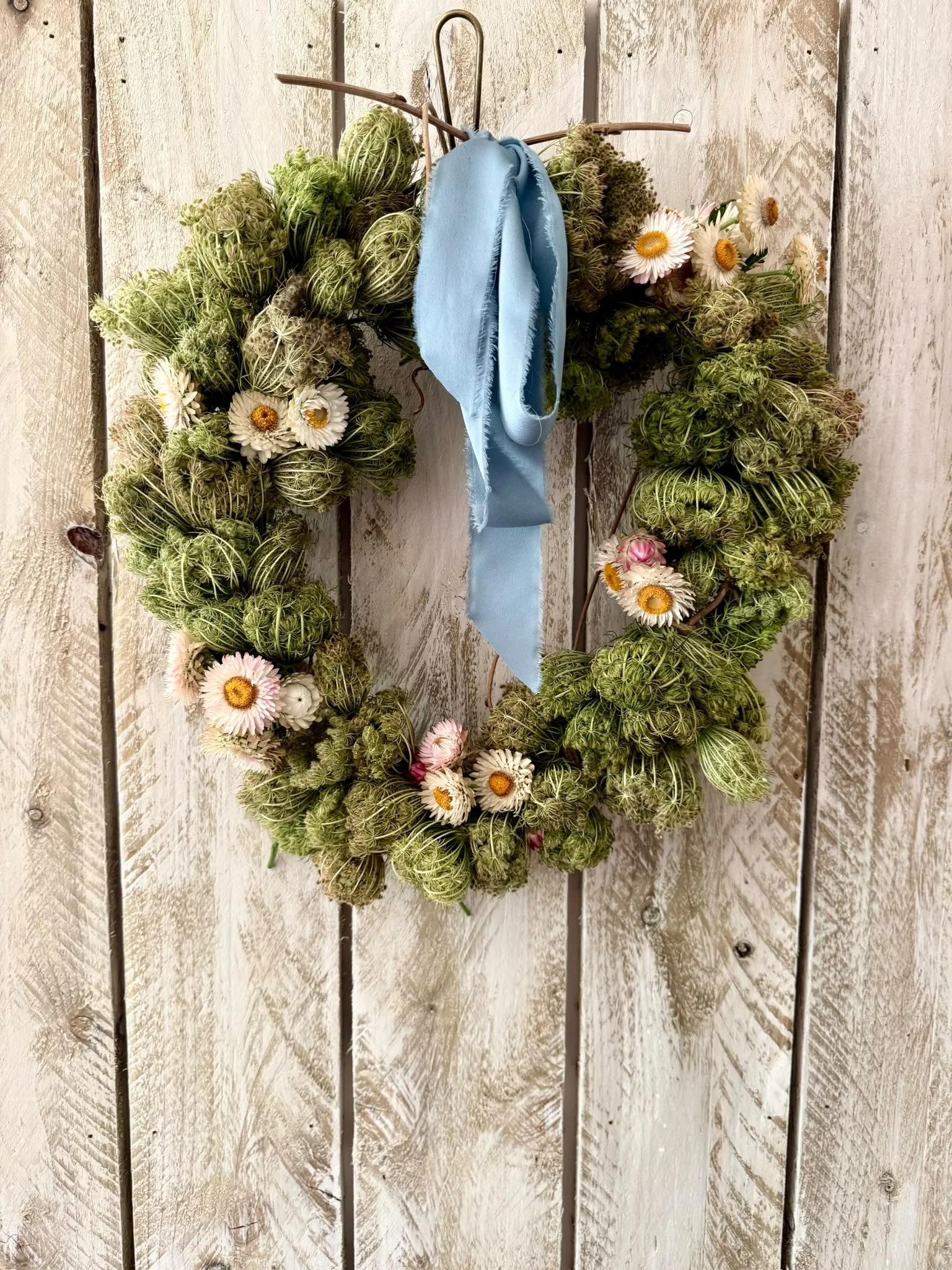
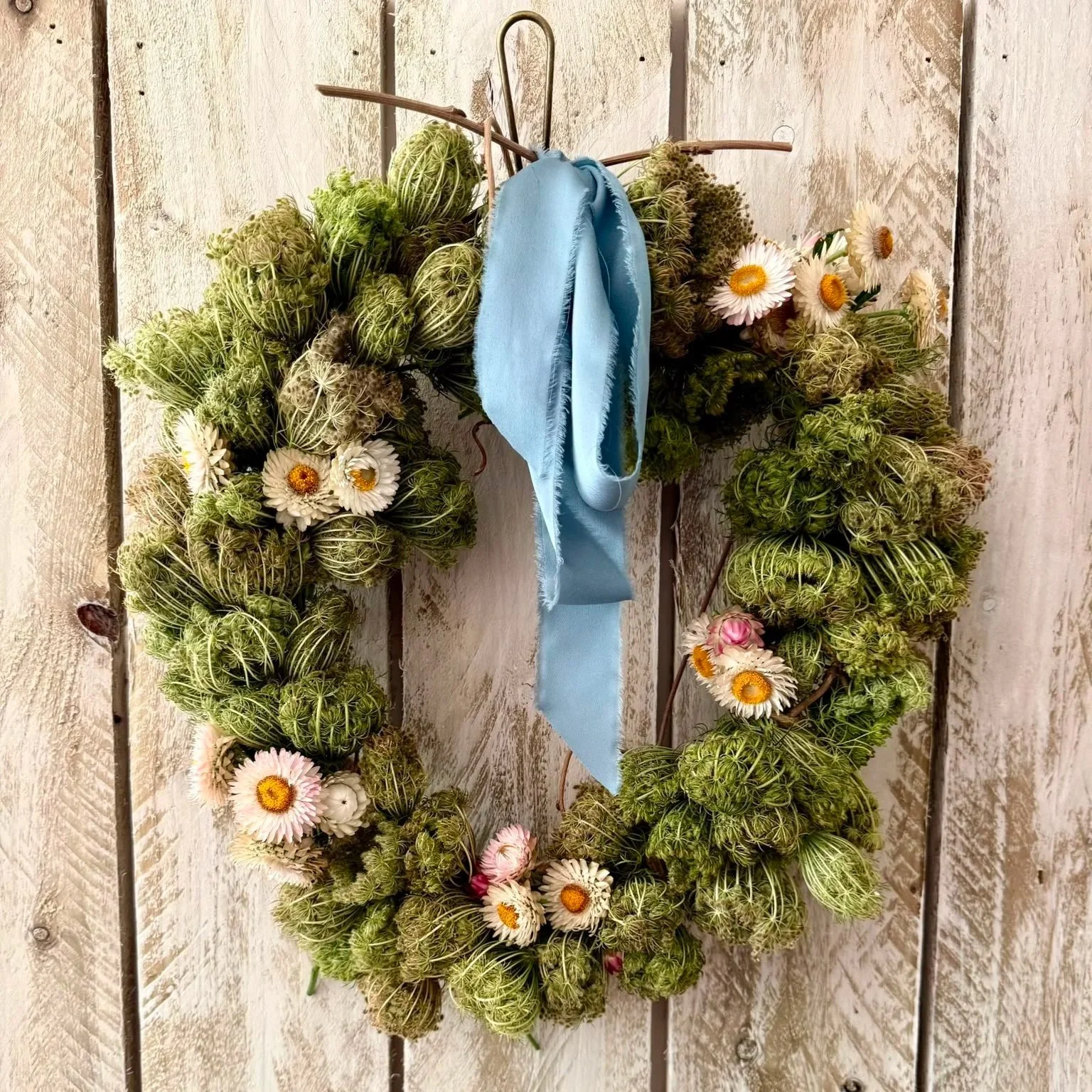
The finished wreath, Daucus carota seed heads and dried strawflowers on a woven wisteria base
A Late-Summer Seed Head Wreath,
Made While Still Green
Late summer on the farm here on the Isle of Wight is a funny mix of two things: making the most of late summer flowers, and starting to look ahead to next year's. There's something really satisfying about interacting with the flowers at each stage of their life cycle, and as some of the early bloomers begin to create seed heads, there are various ways I like to create with them to extend their use.
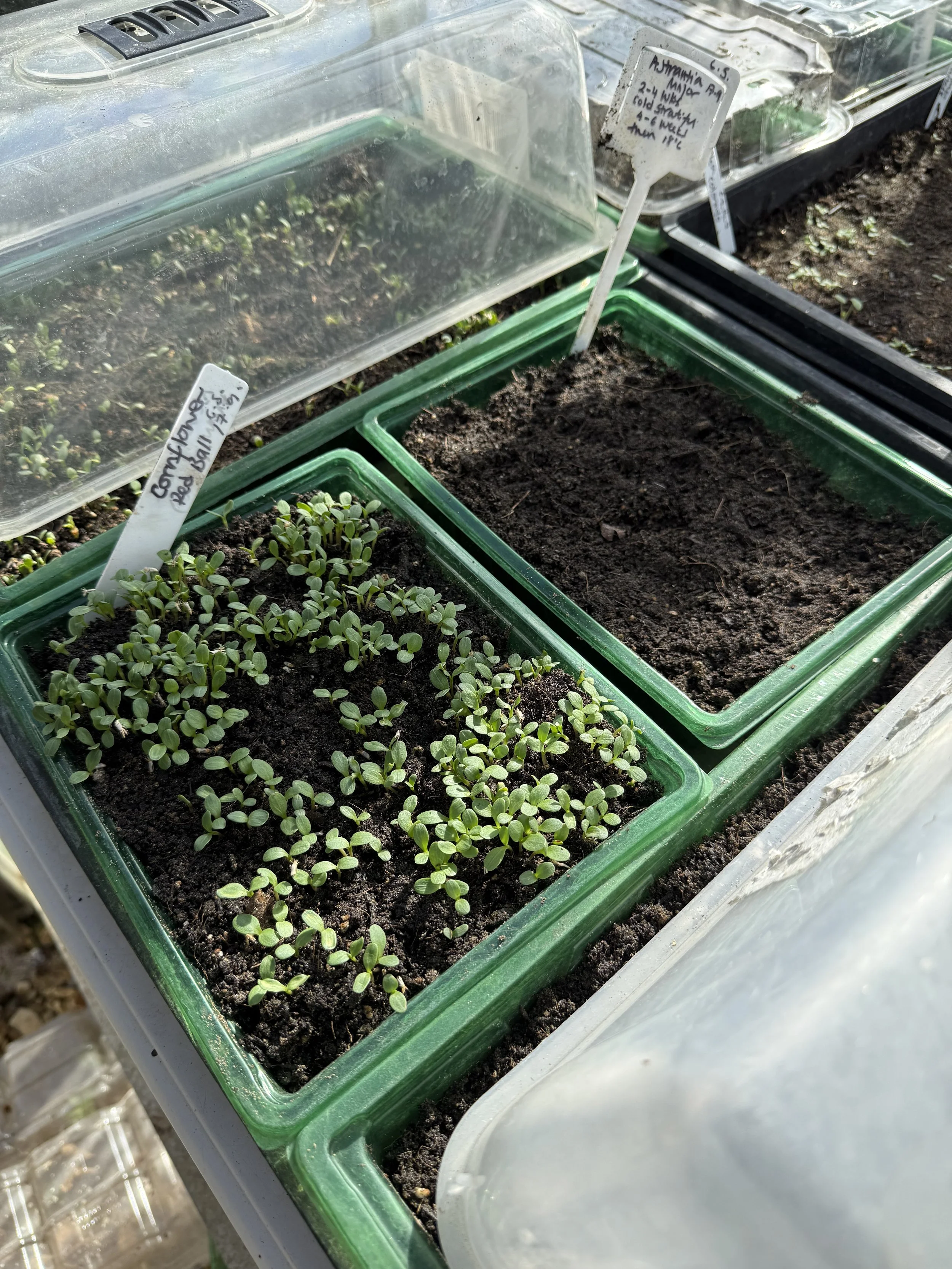
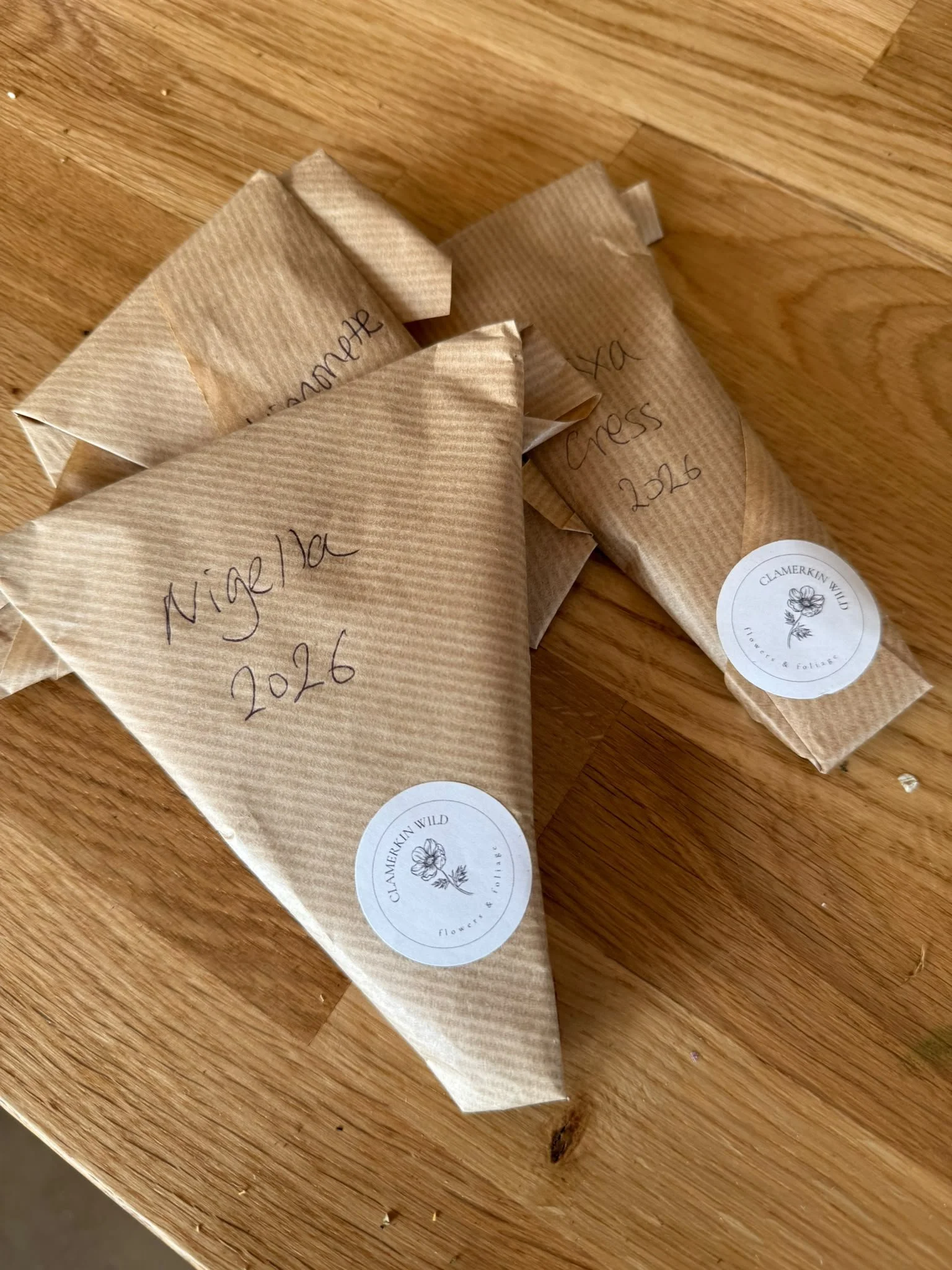
At the same time, late August is when I start collecting seed, ready for next year. Every flower farmer seems to have their own way of doing it — what they save, when they pick it, how they store it — and I am continually developing what works well for me and my growing space. So this is what late summer looks like here on the farm: finishing off one season while quietly starting the next. Here's what I made with the last of this year's Daucus.
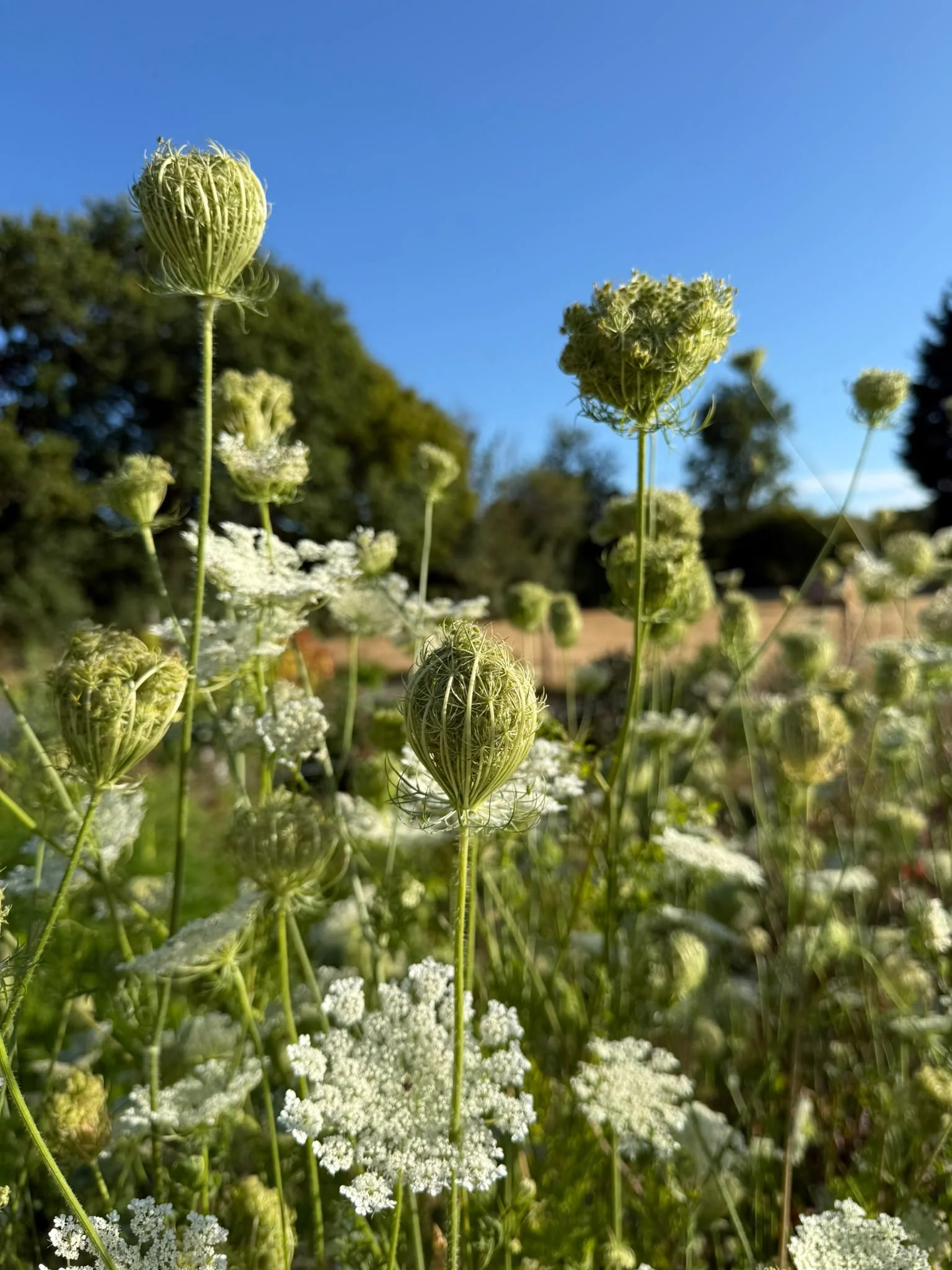
Daucus carota still in the field, just starting to form its seed heads
The Star of the Wreath
The flowers are the seed heads from a plant commonly known as Queen Anne's lace (Daucus carota). It is part of the carrot family and produces gorgeous white, fluffy flowers, similar to cow parsley, which are wonderful in bouquets and arrangements. An added bonus for florists is that they also dry well, producing beautiful seed heads, which remind me a little of intricate filigree work — almost like Fabergé eggs.
Harvesting
I have enjoyed experimenting with them, and I like to use them when they're still green. If you pick them when they're fully dried, the seeds will drop out everywhere. The best time to harvest them is when they've just formed those beautiful seed heads but the seeds aren't fully ripe, and there's still lots of green colour. They're also a bit more flexible to use at that stage. I did have to pick a lot — I used about 85 heads on a 12" base.
The Base
On this particular wreath I used a twisted wisteria base that I'd woven when the wisteria tendrils were still green, and it dried over the year into a firm, usable base. I used string throughout, ensuring the whole piece would be fully compostable.
Building It Up
You should build it up with clusters of seed heads arranged in the same direction all the way around the wreath. I used groups of three to five seed heads, and bound them tightly onto the base with string. I then interspersed them with straw flowers I'd previously dried, again in clumps of three to five, spaced roughly equally around the wreath. I did that five times. Using odd numbers in flower arranging makes pieces more visually pleasing. But you could add whatever you wanted, or leave it completely plain and it would still look very cool.
A Tip on Stems
Have a go, don't be scared. You probably don't need the stems to be too long, but it's easier to pick them long and then cut them down as you go, so you don't get any stem showing when you finish.
How Long Will a Natural Wreath Last
I'm hoping it will last several months — it could last longer, but it will start to go brown. If that's not the look you want, you'll probably get a month out of it. But it will last a whole year if you're not worried about the colour it fades to, and it's a perfect decoration for a front door or inside space.
A First for the Workshops
This is the first time I've made one of these, but it's definitely something I'd like to build into my dried flower workshops. Using seed heads for impact, not just dried flowers.
If you'd love to have a go at wreath making yourself, keep an eye out - this is going to be part of my Autumn dried flower workshops very soon. With Christmas on its way, it's worth booking early once dates are live, wreath workshops always go quickly this time of year.
You can book a place on the autumn or Christmas wreath workshop here
Written by Sarah Cox, grower at Clamerkin Wild, Isle of Wight.