
Plants for Free: How I Collect and Save Seed for Next Year
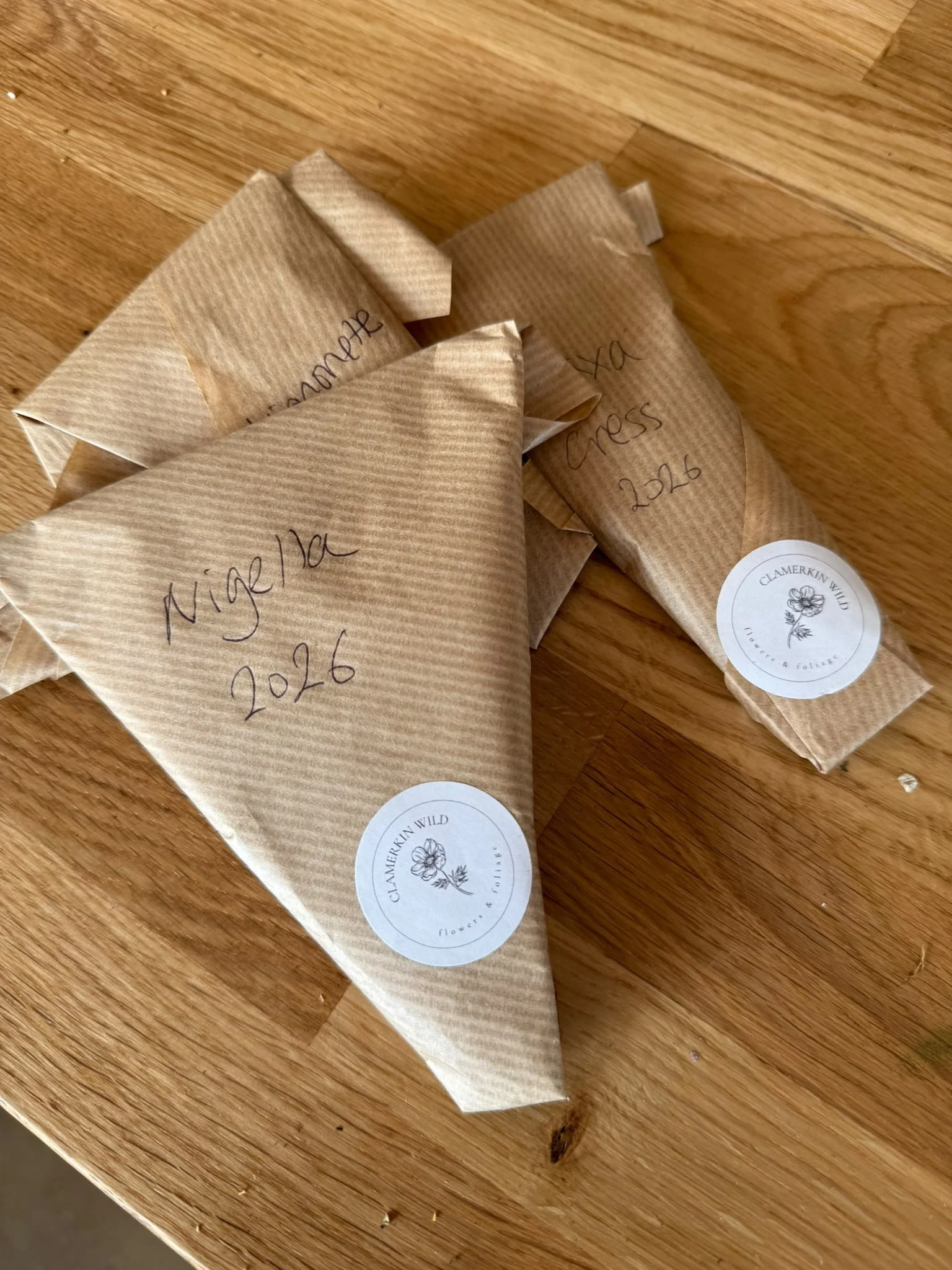
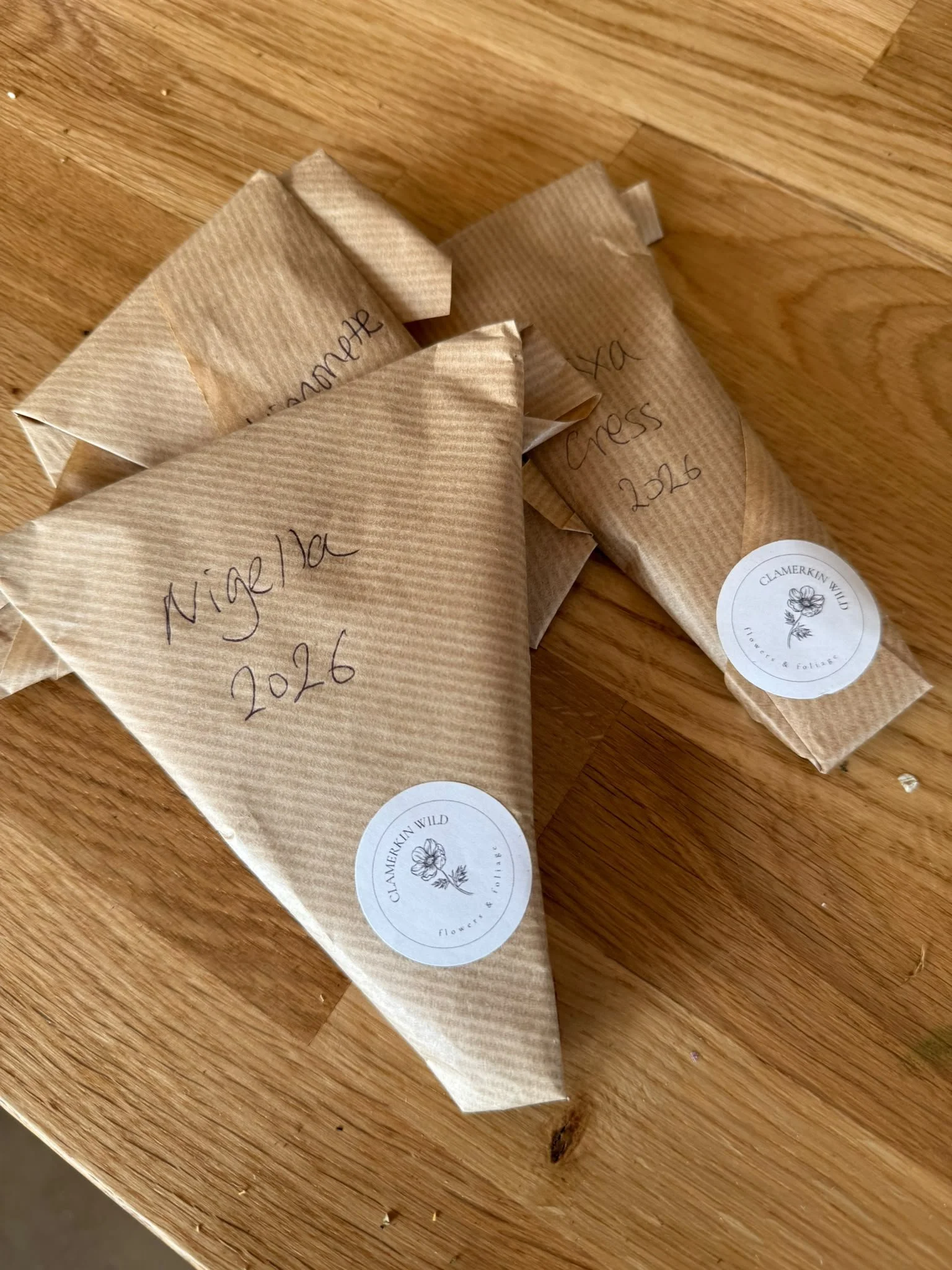
This year's seed, labelled and ready for next spring
There's a side to flower farming that never makes it into a finished bunch of flowers. While most of what's visible on the farm is winding down for the year, the real work is happening quietly: judging exactly which seed heads are ripe enough to collect, deciding what to sow now against what to save for spring, and choosing next year's varieties based on what's actually thrived this year rather than what looked good on a packet.
It's less photogenic than a finished bouquet, but it's this kind of thinking, built up over years of growing, that actually decides what next year's flowers will look like. Here's what's going into that decision-making on the farm right now.
This is really the time of year I'm looking ahead to next year — it's extremely satisfying to feel you can grow plants for next year based on what you've grown this year. I'm hoping to buy less seed and use a lot more of my own
Getting the Timing Right
Collecting seed on a dry day is important. Seeds that are damp will rot and you need to make sure the seed heads are fully ripe — by that point they'll probably have started to turn brown. They need to be stored somewhere airtight so they don't get a chance to go mouldy.
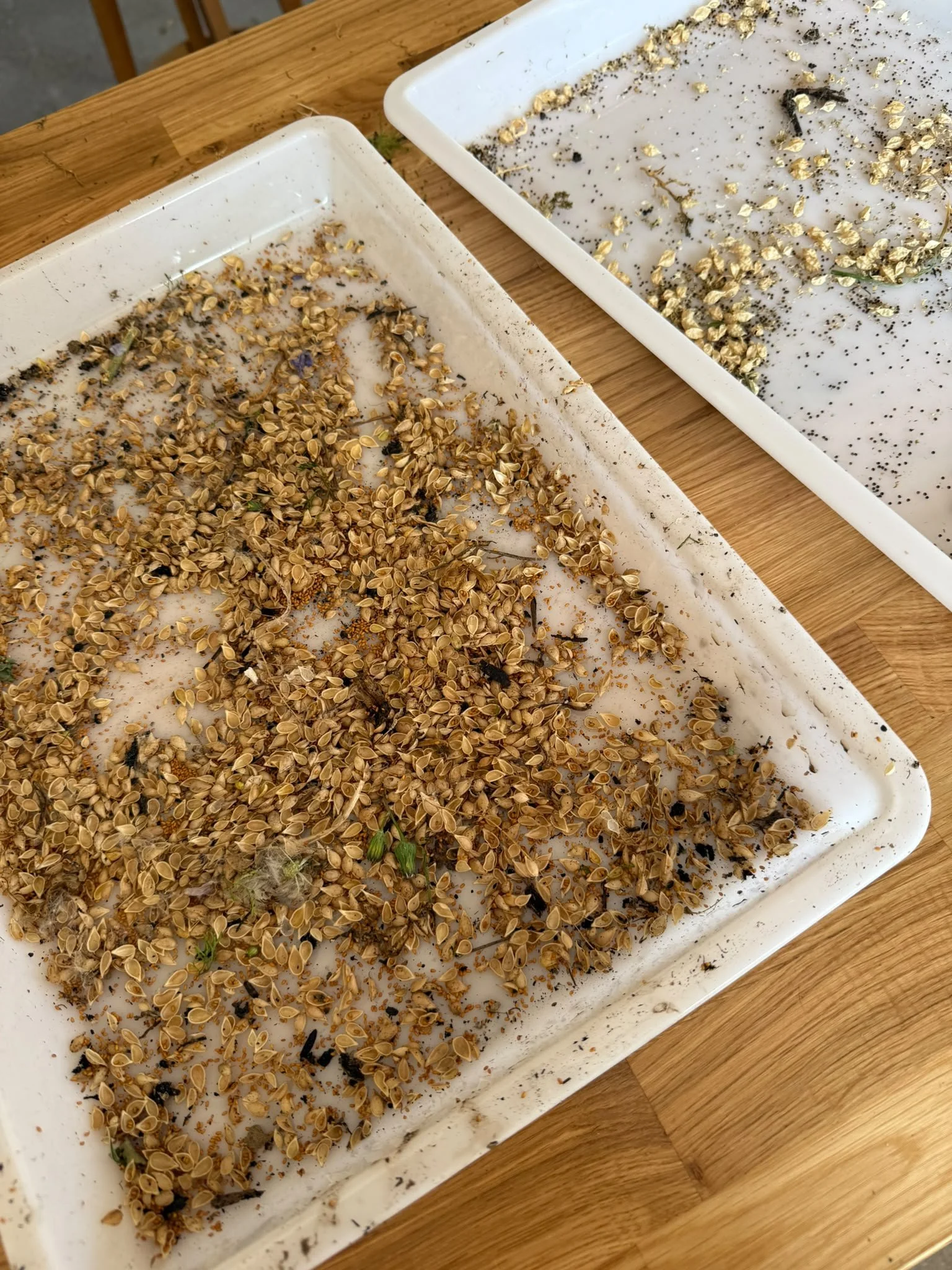
Seed cleaned of chaff and ready for storing
Sowing in Autumn for a Head Start
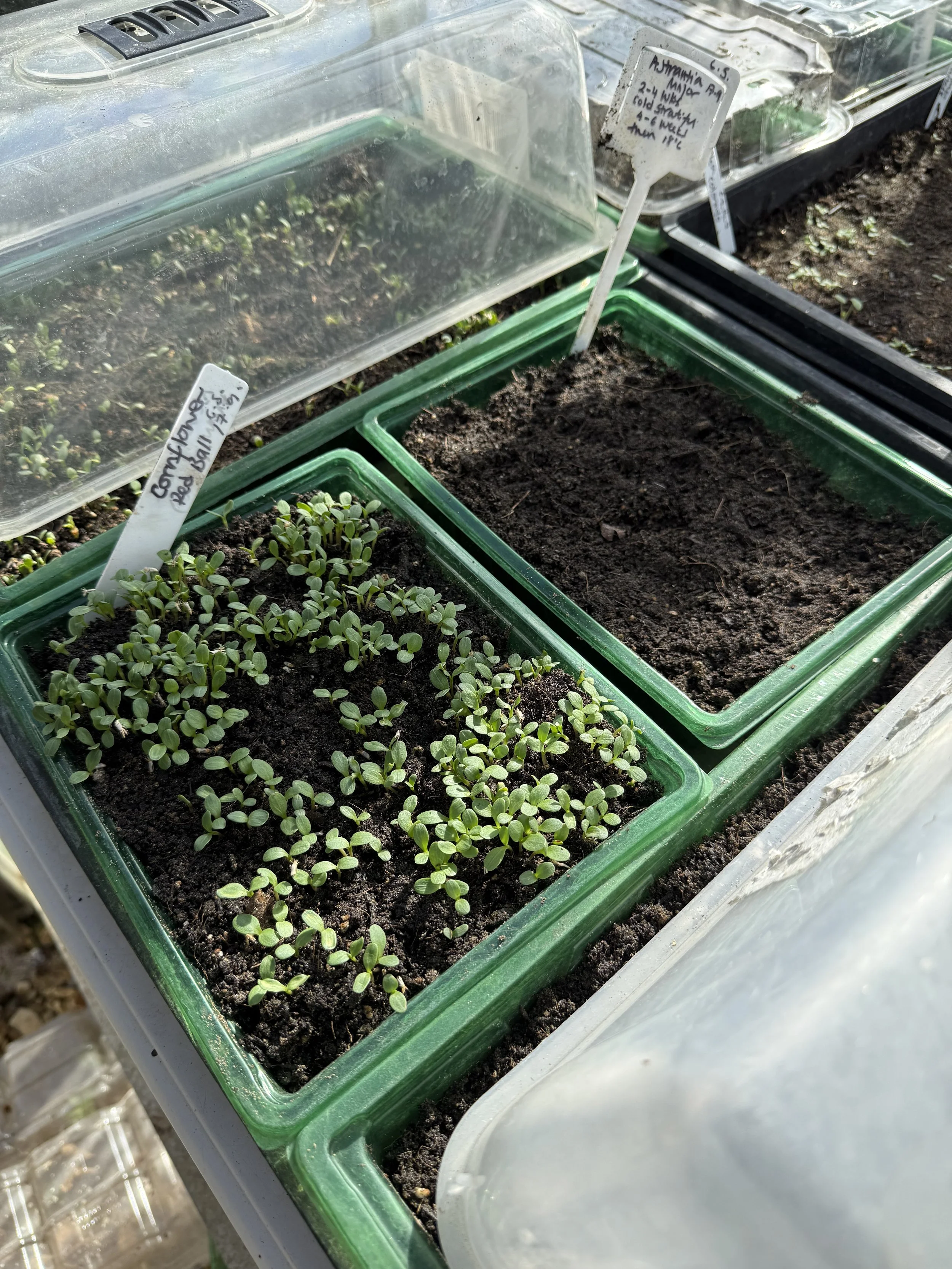
Some seeds can be sown in September, because they're hardy annuals, which means they are strong enough to survive the winter. The plants will start to germinate in September and October. I'll pot them on or plant them out once they're fairly strong — they'll overwinter and won't show much sign of growth during this time, but they'll be in a strong position to produce new growth early in spring, so you get a head start.
You can also germinate them in spring, but then you have to wait until March or April for temperatures to warm up, and by that point the timing means the plants come on a bit later. So I'll do both, to help with succession planting — this means I will get a continuous succession of plants reaching fruition ready to harvest at different times, rather than everything blooming at once and then going over. That's my goal for next year: two or three different crops through spring and summer.
Plants for Free
Something else worth mentioning on seed collecting: many plants will germinate unaided if you just leave them alone. For example, a lot of the seed I've been collecting at the moment — if I just left it on the plant and didn't collect it, there would still be a fairly good germination rate from it just self-seeding, or what's known as self-sown plants. The seed drops into the ground and, provided the conditions are right for germination (and the mice and birds don't get there first) it'll just produce new plants for free next year, all by itself. Plants for free — flower farmers everywhere love that!
Some plants, for example larkspur and Orlaya grandiflora, also need cold stratification. The seed needs to stay in the ground over winter — it needs that drop in temperature, the freezing over winter, to germinate. Those can be a little trickier, but a lot of plants will just propagate themselves by self-sowing or can be helped along in the freezer if you have harvested them first.
As a flower farmer, that's a win-win. I like to collect seed but also leave some on the plants so they can do their own thing naturally as well — one is back up for the other.
What I'm Growing More of Next Year
This year's lack of rain has made me think more carefully about which plants are managing better without much water. I'm definitely moving towards slightly more drought-resistant plants: cosmos, ammi, scabious and daucus are all less needy in terms of water.
I'm also focusing on plants that give a good stem length. For example, I grew wallflowers at the start of the season. Beautiful, the bees loved them, and they smell fantastic but the stem length is really too short to use in bouquets and arrangements, so I probably won't grow them again. Similarly, something called cerinthe is difficult to use in bouquets. I'll focus much more on plants I can use well in bouquets and arrangements, rather than something like marigolds - absolutely gorgeous, but too short for arrangements. Good stem length and a bit more drought resistance - that's the focus.
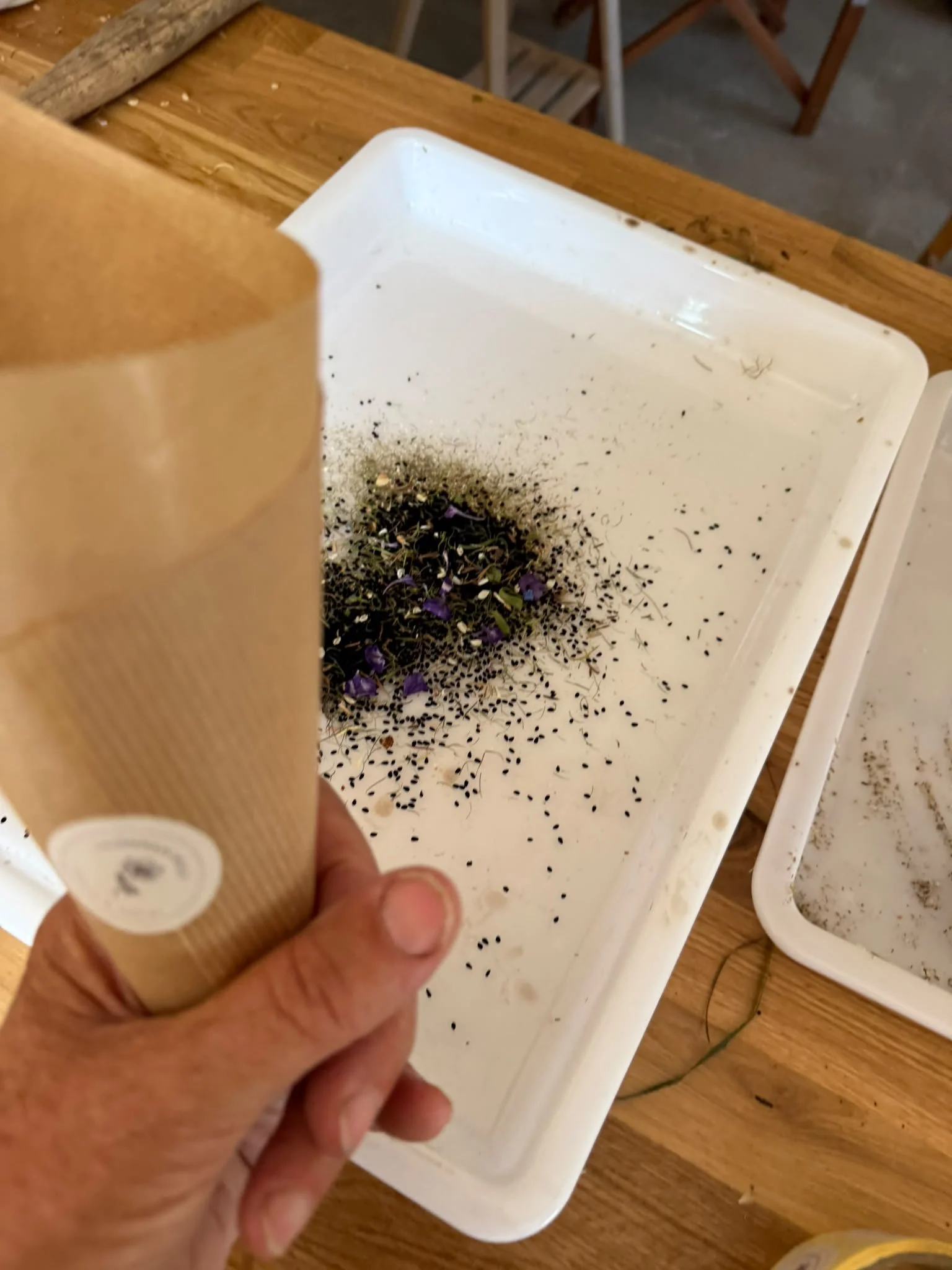
Nigella, one of the "rattly" seed heads, being separated out for cleaning
A Common Mistake to Avoid
You have to make sure it's really fully ripe. The best way to test that is to check the seed has turned colour — probably a much darker colour, no longer green. If it's still a bit green, it isn't ripe yet.
How Different Seeds Travel
I'm really enjoying noticing how different the seeds are. Some flowers, like nigella and corncockle, make a rattly sound and are dispersed by the wind from their seed pods — almost like a little rattle. Other seeds are smaller and tend to just drop to the ground near where they are — they rely on the wind a bit too, but in a different way, and the seed heads look quite different. Then there are seeds that rely on birds eating them and get dispersed that way. There's actually a lot of science behind seed dispersal, but what I love is the rattle-headed ones that make a sound in the wind — that's quite interesting.
Why Local Seed Does Better
Seed collected from your own plants or grown locally has many advantages beyond the obvious cost savings. These seeds are from plants adapted to your specific soil, climate and pest pressures and should therefore have better resilience. However, a lot of the seed we buy from the big seed production companies has been flown in from, or grown in other countries. If we can buy locally sourced seed, or collect our own, we encourage plants that grow more happily in our own conditions — and there's the added benefit of no air miles. Grown not flown!
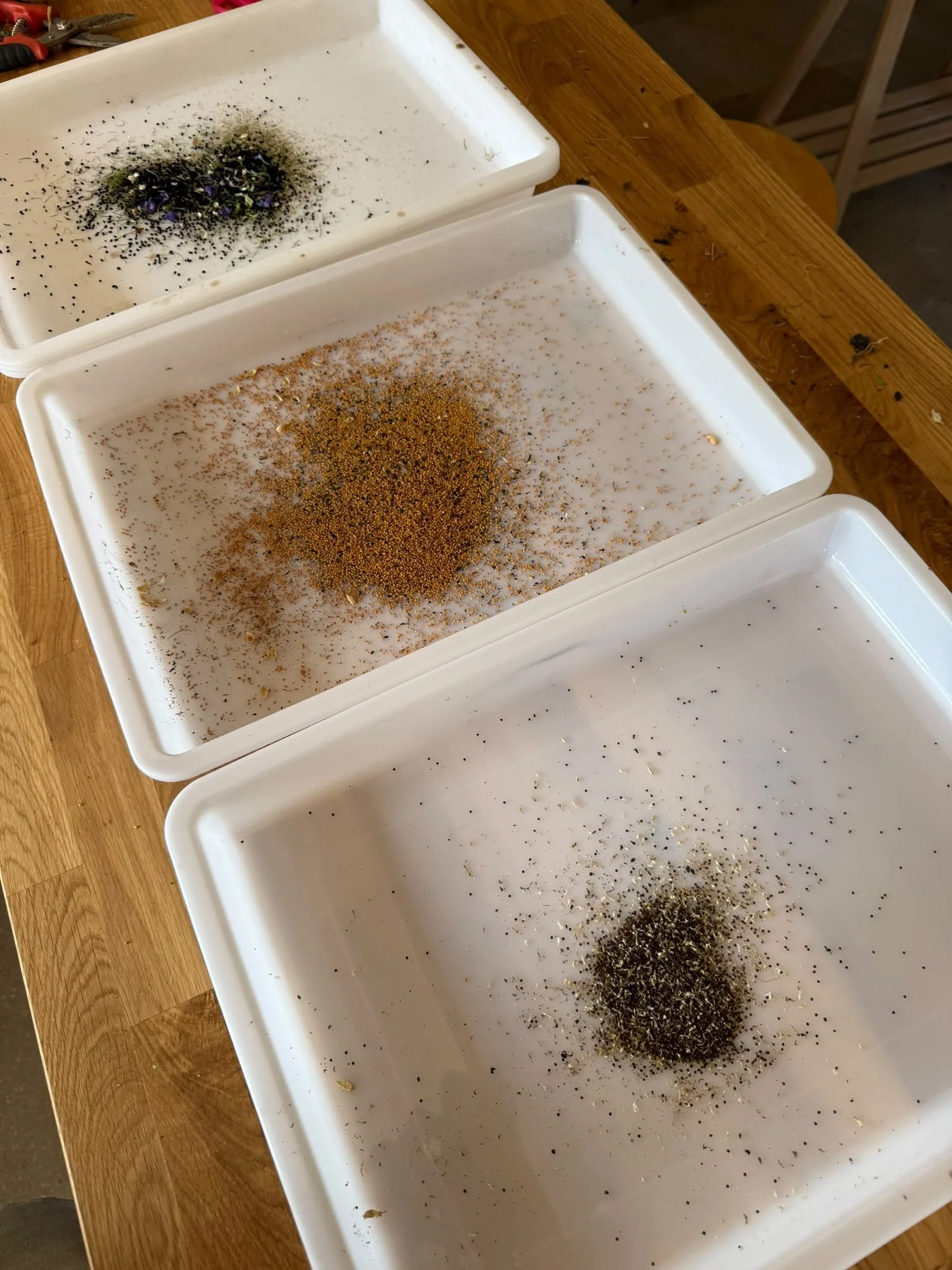
Next years harvest.
Full Circle
This is the part of flower farming that never makes it into a finished bunch of flowers, but it's the part I love most. Deciding what to harvest and what to leave for the birds and the ground to take care of, judging which seed still needs another week and which is ready to come in, choosing to grow what actually thrives here rather than what's easiest to buy in: it all feeds back into the next cycle, and the one after that.
Every year I understand this farm a little better, and every year what I grow is that bit more suited to being grown here, on the Island, without needing to be flown in from somewhere else first. That's what I love about being part of the British flower farming movement — it isn't just about growing flowers, it's about growing them properly, working with where they are rather than against it. It's slow, it's sometimes fiddly, and it's completely worth it.
Written by Sarah Cox, grower at Clamerkin Wild, Isle of Wight.